The Definitive Guide to Hybrid CNC Press Brakes: Technology, Cost-Efficiency, Performance, and Buyer's Roadmap
- Share
- publisher
- Daisy Li
- Issue Time
- Oct 22,2026
Summary
Discover how hybrid CNC press brakes combine the extreme power density of hydraulics with the precision and energy efficiency of servo drives. This comprehensive 2026 engineering guide covers dual-servo pump architecture, three-way performance comparisons, 60% electricity savings, 80% oil reduction, and a full TCO ROI economic model for modern fabrication shops.
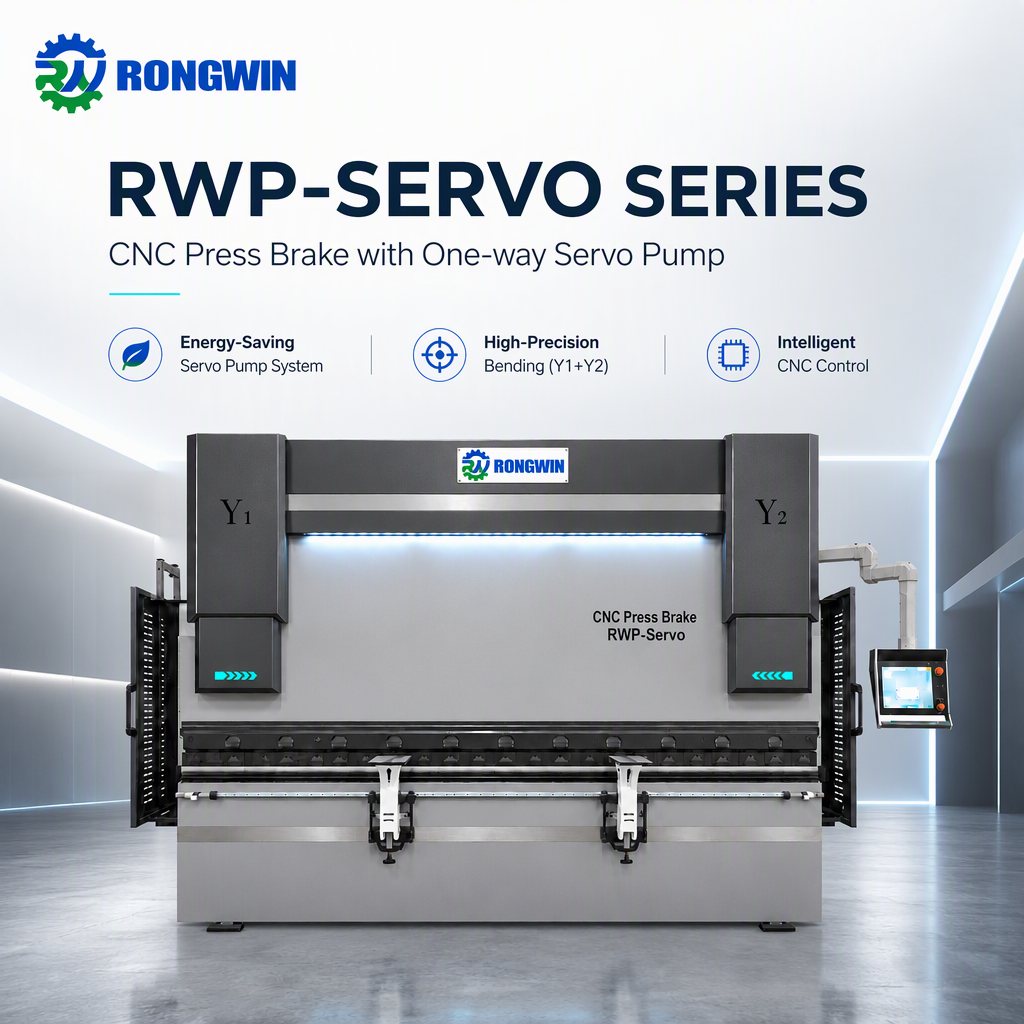
The Definitive Guide to Hybrid CNC Press Brakes: Technology, Cost-Efficiency, Performance, and Buyer's Roadmap
Authoritative Engineering Guide for Metal Fabricators, Plant Directors, and Sheet Metal Equipment Buyers
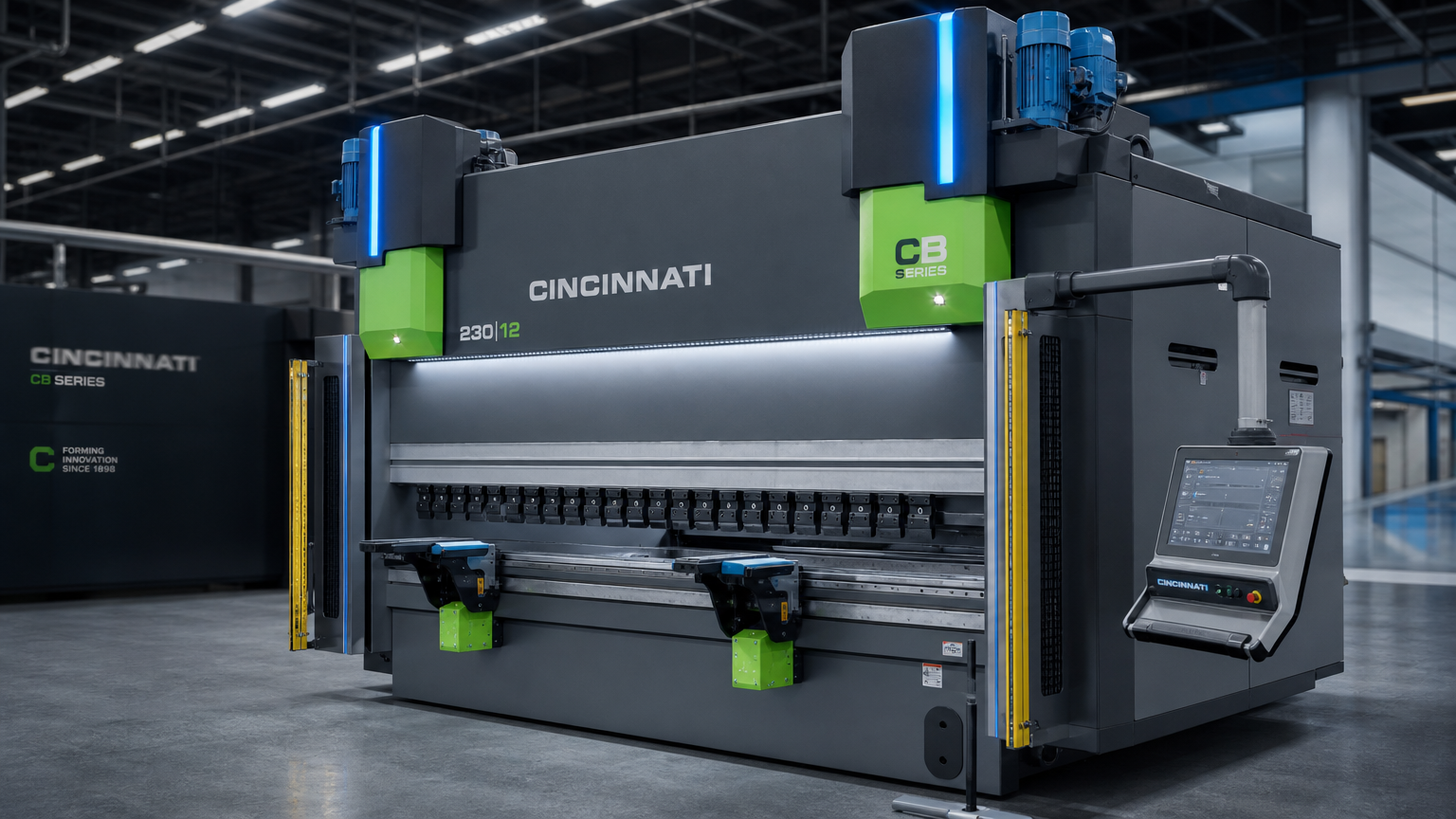
1. Executive Summary: The Rise of Hybrid Bending Technology
In industrial sheet metal fabrication, manufacturers continually face a fundamental trade-off: How to achieve the extreme energy efficiency, precision, and low maintenance of all-electric machines while retaining the massive tonnage capacity, rugged durability, and cost-effectiveness of hydraulic power?
For decades, standard electro-hydraulic press brakes dominated the market, but their continuous motor idling, massive hydraulic reservoirs (200 to 500+ liters), thermal oil drift, and periodic fluid leaks represent significant operational liabilities. Conversely, while 100% all-electric servo press brakes excel in thin-gauge, low-tonnage applications (typically under 100–130 Tons), their mechanical ball screws and belt systems become prohibitively expensive and mechanically stressed when scaling to heavy-duty, high-tonnage sheet metal forming.
The Hybrid CNC Press Brake (also known as the Electro-Hydraulic Servo Hybrid Press Brake or Dual-Servo Pump Press Brake) bridges this critical industry gap. By combining high-dynamic AC servo motor drives directly with compact, closed-loop bi-directional hydraulic micro-pumps at each cylinder, hybrid technology delivers up to 60% energy savings, slashes hydraulic oil volume by over 70% to 85%, eliminates proportional throttling valve losses, and provides micrometer-level positioning accuracy across tonnages from 100 Tons to over 1,500 Tons.
This definitive guide provides an exhaustive technical analysis of hybrid press brake engineering, compares hybrid systems against both conventional hydraulic and all-electric architectures, delivers a comprehensive Total Cost of Ownership (TCO) financial model, and outlines actionable purchasing criteria for fabrication businesses worldwide.
2. What is a Hybrid CNC Press Brake? Architecture and Working Principle
2.1 The Electro-Hydraulic Servo Drive Concept
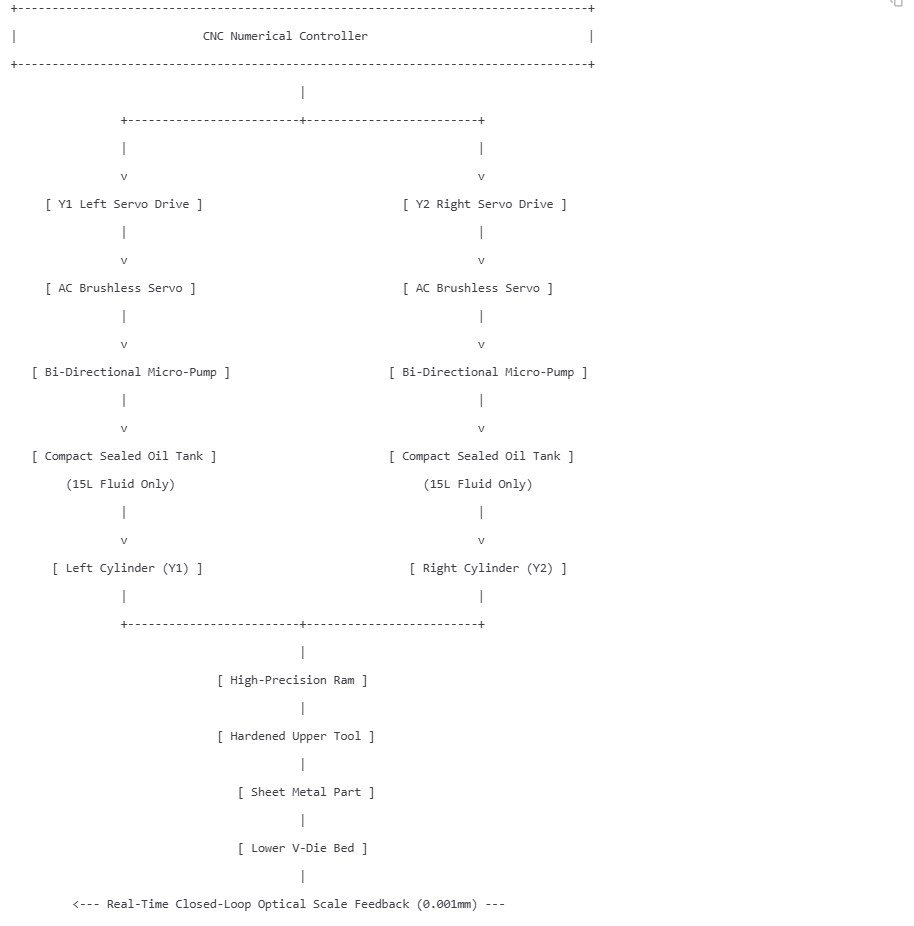
Unlike traditional hydraulic press brakes that use a single, constantly spinning asynchronous induction motor coupled to a large variable displacement pump with proportional directional valves, a hybrid press brake operates on a decentralized, on-demand dual-servo pump architecture.
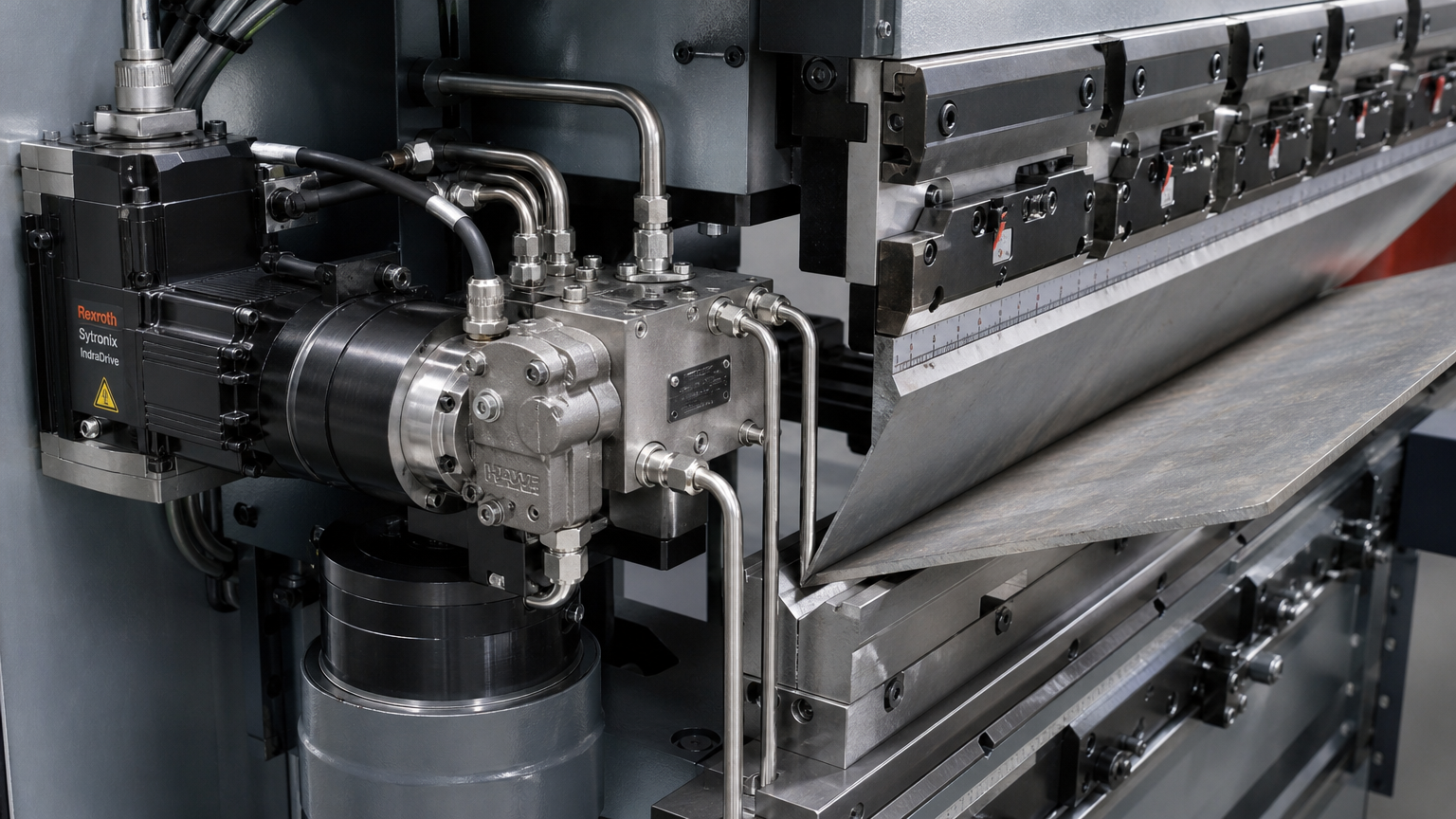
Each cylinder (Y1 on the left side, Y2 on the right side) is an independent, closed-loop electro-hydraulic unit comprising:
1.Dedicated High-Torque AC Servo Motor: Directly controlled by high-frequency servo drives.
2.Bi-Directional High-Efficiency Hydraulic Micro-Pump: Directly flanged to the servo motor shaft.
3.Integrated Compact Valve Block: Mounted directly on top of or adjacent to the hydraulic cylinder with minimal internal piping.
4.Independent Sealed Oil Reservoir: Containing merely 10 to 20 liters of hydraulic fluid per cylinder (compared to 250–400 liters in a centralized conventional tank).
2.2 Operational Cycle Mechanics: On-Demand Power Delivery
The motion of the upper ram is controlled exclusively by varying the rotational speed and direction of the servo motors rather than throttling pressurized fluid through resistive proportional valves:
1.Fast Approach Phase: The servo motors rotate at high RPM in the forward direction, delivering high-flow fluid directly into the cylinder top chambers to drive the ram down at speeds up to 200–220 mm/s.
2.Precision Bending Phase: As the punch touches the sheet metal (mute point), the CNC controller switches to high-torque pressure mode. The servo motors precisely modulate torque and rotational micro-stepping to deliver exact tonnage and depth positioning down to +/- 0.005 mm.
3.Decompression Phase: The servo motors briefly reverse direction to relieve stored elastic hydraulic pressure smoothly, preventing shock waves, noise, and mechanical vibrations.
4.Fast Return Phase: The servo motors spin rapidly in reverse, pumping oil into the cylinder annular return chambers, retracting the ram at speeds up to 180–200 mm/s.
5.Standby Phase: When the operator is loading, measuring, or repositioning the workpiece, the servo motors come to a complete stop (0 RPM). Power draw drops to under 0.2 kW, generating zero noise and zero heat.
3. Comprehensive Three-Way Comparison: Hybrid vs. Conventional Hydraulic vs. All-Electric
To understand where hybrid CNC press brakes deliver maximum return on investment, we must evaluate them alongside conventional hydraulic and all-electric alternatives:

3.1 Why Hybrid Outperforms Conventional Hydraulic
1.Elimination of Valve Throttling Heat: In conventional hydraulics, high-pressure oil forced through narrow proportional valve orifices creates severe friction, generating substantial heat. Hybrid systems pump only the exact volume needed, keeping fluid temperature within 5 deg C of ambient room temperature.
2.80% Hydraulic Oil Reduction: Traditional 160-Ton machines require 300+ liters of hydraulic oil; a hybrid machine of identical tonnage requires just 30 liters in total. This drastically lowers fluid disposal costs, eliminates environmental contamination risks, and extends oil service life to over 8–10 years.
3.Decisive Speed Advantage: Fast approach and return speeds up to 200 mm/s shorten dry-cycle times by 35% compared to sluggish conventional hydraulic valves.
3.2 Why Hybrid is the Superior Choice Over All-Electric for Mid-to-Heavy Tonnages
While all-electric press brakes are outstanding for small, thin-sheet electronic chassis under 100 Tons, scaling mechanical ball screws or belt-pulley clusters to 160 Tons, 250 Tons, or 500 Tons results in massive mechanical gearboxes, severe component wear under shock loads, and exorbitant machine acquisition costs.
Hydraulic fluid remains the most efficient, durable, and cost-effective medium for transmitting extreme compressive force. Hybrid press brakes harness this hydraulic power density while eliminating its traditional inefficiencies through digital servo control.
4. Key Engineering Innovations in Modern Hybrid Press Brakes
Modern hybrid CNC press brakes incorporate sophisticated multi-axis control, precision sensors, and Industry 4.0 software:
4.1 Dynamic Closed-Loop CNC Crowning
Under heavy bending loads across long bed lengths (3m to 6m), natural structural deflection of the upper beam and lower bed creates angular variations between the center and ends of the workpiece. Modern hybrid press brakes utilize CNC motorized mechanical wave crowning or multi-cylinder dynamic hydraulic crowning integrated into the lower bed. The CNC calculates the exact deflection curve based on programmed sheet thickness, yield strength, and bending length, automatically adjusting compensation wedges in real time.
4.2 Real-Time Laser Angle Measurement and Springback Compensation
Variations in raw material coil batches, grain direction, and tensile strength often cause unpredictable angular springback. Advanced hybrid machines integrate high-precision optical laser angle sensors that track sheet deflection during the stroke. The CNC controller dynamically detects material resistance, computes the instant springback angle, and automatically adjusts the bottom dead center (BDC) before releasing the workpiece—achieving first-part, perfect-part precision.
4.3 High-Speed 4 to 6-Axis Servo Backgauge Systems
Equipped with dynamic servo motors, precision linear guides, and ball screws, multi-axis backgauges (X, R, Z1, Z2, X-prime) achieve traverse speeds over 500 mm/s with positioning repeatability of +/- 0.02 mm, facilitating complex multi-step, tapered, and asymmetric bending sequences in a single setup.
4.4 Smart Industry 4.0 IoT & Cloud Telemetry
With native support for industrial IoT protocols (OPC UA, MQTT, Ethernet/IP), hybrid press brakes feed real-time telemetric data into factory MES/ERP systems. Plant managers can remotely monitor overall equipment effectiveness (OEE), cycle counts, energy consumption per part, and schedule predictive maintenance alerts before component wear impacts production.
5. Total Cost of Ownership (TCO) & ROI Economic Analysis
While a hybrid CNC press brake has an initial capital expenditure (CapEx) approximately 15% to 25% higher than a basic conventional hydraulic unit, its dramatic reduction in operational expenditure (OpEx) yields rapid financial payback.
5.1 Financial Comparison Model (160-Ton / 3200mm Machine, 4,000 Operating Hours/Year)

5.2 Direct Value Drivers:
1.Electricity Reduction: Consuming energy strictly during active bending cuts power costs by $6,240 annually per machine.
2.Hydraulic Oil Savings: Requiring only 30L of fluid eliminates massive 300L oil replacements, specialized disposal fees, and hydraulic filter cartridge purchases.
3.Reduced Scrap and Rework: Eliminating thermal oil drift ensures that the first bend in the morning matches the last bend in the afternoon, reducing high-value material scrap by up to 60%.
4.Extended Tooling & Machine Life: Smooth, shock-free servo decompression prevents hydraulic shock spikes, extending the working lifespan of precision-ground punches and V-dies.
6. Engineering Selection Guide: Sizing Your Hybrid Press Brake
Selecting the ideal hybrid CNC press brake configuration requires evaluating sheet metal specifications, tooling standards, and automation requirements:

6.1 Essential Sizing Calculation
To determine required bending tonnage, use the standard air-bending formula:

6.2 Key Machine Specifications Checklist
1.Throat Depth & Open Height (Daylight): Ensure adequate clearance for 4-sided deep boxes, tall return flanges, and high gooseneck tooling.
2.Tool Clamping System: Standardize on precision quick-clamping systems such as Wila/Trumpf hydraulic/pneumatic clamping or European-style Promecam quick-release clamps.
3.CNC Controller Capability: Select multi-touch graphical CNC controllers (such as DELEM DA-66S/69S, ESA S660W/S675, Cybelec, or SYNTEC) supporting 3D CAD/CAM offline programming, automatic bend sequencing, and collision detection.
4.Safety Integration: Equip with optical safety light curtains or camera-based optical protection systems (e.g., DSP, Lazer Safe) that allow rapid approach speeds right down to the sheet surface without compromising operator safety.
7. Preventative Maintenance & Operational Best Practices
To ensure peak performance and 20+ years of reliable operation:
1.Sealed Hydraulic Circuit Inspection: Periodically check micro-pump couplings and manifold seals for zero weeping. Because fluid operating temperatures remain low, seals experience negligible thermal degradation.
2.Precision Optical Scale Maintenance: Clean linear optical glass scales and ensure dry, clean air-purge lines prevent shop dust ingress.
3.Centralized Automatic Lubrication: Maintain grease reservoirs for backgauge ball screws, linear guide rails, and crowning wedge tracks.
4.Electrical Enclosure Cleanliness: Regularly inspect cooling filters on servo drive cabinets to prevent metal dust accumulation around high-voltage power modules.
8. Conclusion: The Smart Standard for Next-Generation Metal Forming
The Hybrid CNC Press Brake represents the pinnacle of modern press brake engineering. By eliminating the high energy consumption, thermal inconsistency, and environmental hazards of legacy hydraulic systems while avoiding the high-tonnage cost constraints of all-electric machines, hybrid technology has established itself as the premier choice for progressive sheet metal manufacturers.
For fabrication facilities seeking to cut operating costs, increase daily throughput, meet rigorous sustainability mandates, and achieve flawless bending precision, investing in a hybrid CNC press brake delivers unmatched long-term competitive advantage.